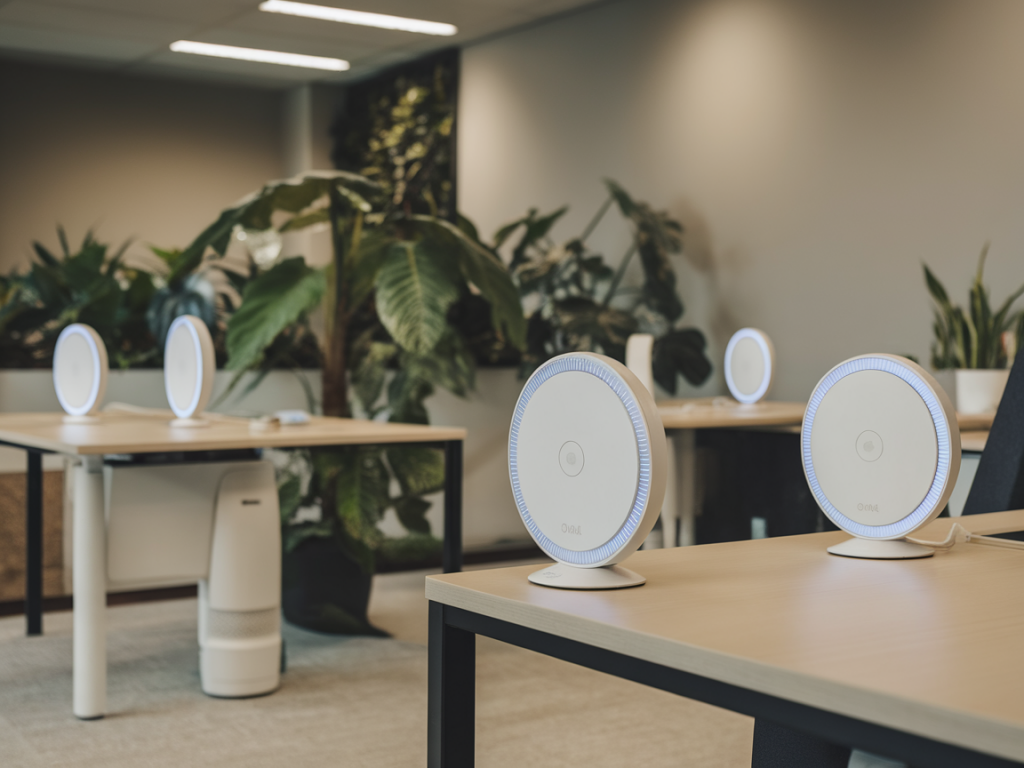
I remember walking into an office a few years ago and thinking, "This smells stale." It wasn't just a passing thought — my eyes started to itch, my concentration dipped, and by mid-afternoon I had a headache. Fast forward to today, and the idea that air quality influences how we feel and perform at work is no longer a fringe opinion. We're increasingly learning that what we breathe at our desks affects attendance, productivity, health costs, and even employer reputation. That's why I think air quality sensors in offices could realistically become a standard HR requirement within the next few years.
Why HR should care about what people breathe
HR teams are responsible for employee wellbeing, safety, and productivity. Traditionally that has meant ergonomics, mental health resources, and handling absenteeism. But indoor air quality (IAQ) directly intersects with these responsibilities. Poor air quality contributes to sick building syndrome, higher rates of respiratory illness, and cognitive impairment. A well-placed sensor network gives HR the data to move from anecdote to action.
When I talk to HR directors, three arguments usually clinch the conversation: measurable health benefits, a positive return on investment, and legal/insurance considerations. Put plainly, sensors provide evidence that can justify changes to HVAC systems, cleaning protocols, and hybrid working policy — and they make the case stronger in conversations with finance and facilities teams.
What air quality sensors actually measure
Not all sensors are created equal. Some focus on particulate matter (PM2.5 and PM10), others on CO2, volatile organic compounds (VOCs), humidity, temperature, or even formaldehyde. CO2 is often highlighted in office contexts because it's a proxy for ventilation — high CO2 usually means stale air and can correlate with decreased cognition. PM2.5 is critical where outdoor pollution infiltrates indoor spaces, and VOC spikes can indicate off-gassing from new furniture or cleaning products.
Brands like Awair, Kaiterra, and IQAir offer different feature sets: Awair makes consumer-friendly units with dashboards and alerts; Kaiterra targets commercial installations with multi-sensor deployments and integration capability; IQAir focuses on filtration and professional-grade monitoring. Choosing the right device depends on scale, accuracy needs, and budget.
Evidence it impacts performance and health
There's growing research linking IAQ to real-world performance. Studies have shown that improved ventilation and lower CO2 levels yield better decision-making scores and fewer errors on cognitive tasks. From a health standpoint, reducing airborne particulates and VOCs lowers respiratory complaints and can decrease days off due to illness.
In practical terms, when an office I was reporting on installed a dozen CO2 and VOC monitors, employees reported fewer headaches and fewer complaints about "feeling tired." HR logged a slight uptick in same-day productivity and a reduction in short-term sick days that correlated with the improvement in ventilation. That kind of before-and-after data is exactly what makes IAQ compelling to HR leaders.
Regulatory and insurance drivers
Legal frameworks vary by country and region, but the pandemic accelerated attention on indoor air. Some jurisdictions are already considering minimum standards for ventilation in public buildings; others are looking at mandates specifically for CO2 monitoring in schools. Employers who proactively monitor and improve IAQ may find themselves ahead of regulatory curves and better positioned in liability scenarios.
Insurance is another angle. Insurers are increasingly interested in workplace environmental risk factors. Documented IAQ monitoring that shows proactive management could influence premiums or claims handling, particularly in scenarios where poor ventilation contributed to outbreaks of illness.
Costs versus benefits — is it affordable?
Initial costs are modest at small scales. A quality single-room monitor from brands like Awair or PurpleAir can be a few hundred dollars. Enterprise-grade systems with multi-zone coverage, integrated dashboards, and building automation system (BAS) integration cost more, but they're comparable to other facility investments. When you factored in fewer sick days, higher productivity, potential energy savings (by optimizing ventilation schedules), and improved employee retention, the ROI figures start to look attractive.
Here’s a simplified way HR teams can present the math to finance:
| Cost item | Typical range |
| Single monitor (per room) | $150–$600 |
| Enterprise installation (per floor) | $2,000–$20,000 (depends on scale) |
| HVAC upgrade/ventilation changes | $5,000–$100,000+ |
| Potential annual savings | Reduced sick days, productivity gains, lower claims |
Numbers will vary hugely by building and workforce, but even conservative estimates of reduced absenteeism and improved output often justify sensor investment within a year or two for medium to large offices.
Privacy and trust: the HR tightrope
One legitimate concern is privacy. Sensors that track air quality in specific desks or meeting rooms can accidentally become proxies for occupancy or movement patterns. HR must be transparent about what data is collected, how it’s used, who can access it, and for how long it’s retained. My advice: publish a clear IAQ policy, share aggregate dashboards rather than individual-level tracking, and involve employee representatives when designing the deployment.
Trust also rises when sensors are linked to tangible improvements. If employees see that elevated CO2 triggers more ventilation or that VOC spikes lead to changes in cleaning products, they’ll be less suspicious and more supportive.
How HR can roll this out practically
Potential pitfalls to avoid
Buying cheap, inaccurate sensors is a false economy — poor data leads to poor decisions. Over-monitoring without clear benefits breeds mistrust. And finally, treating sensors as a one-off fix rather than part of a sustained IAQ program misses the point; monitoring must feed action.
I've seen companies that treated IAQ data like any other business metric: they set targets, held facilities accountable, and reported progress internally. The result wasn't just cleaner air — it was a cultural shift where employees felt their health was taken seriously. That’s the kind of outcome that makes IAQ monitoring more than a facilities initiative — it becomes an HR standard.