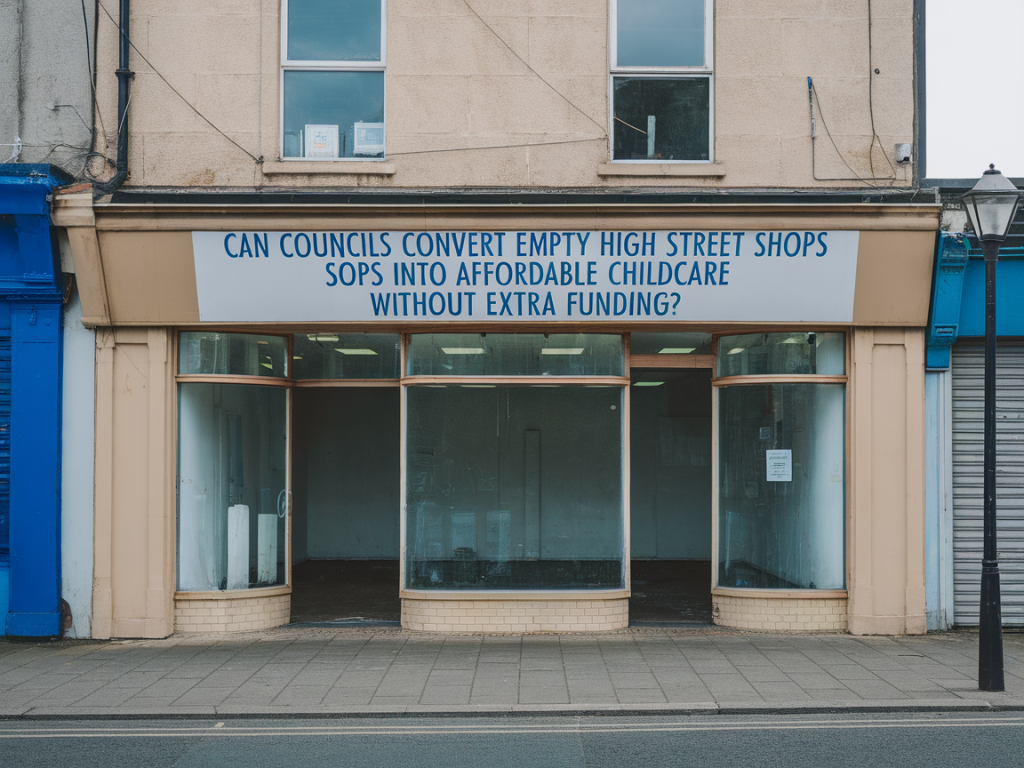
I’ve been following the debate about empty high street units and the chronic shortage of affordable childcare across the UK for years. On paper, the idea seems irresistible: repurpose vacant shops into neighbourhood nurseries, kill two birds with one stone, and revitalise local economies while helping parents get back to work. In practice, however, the path from empty shopfront to warm, well-staffed childcare setting is littered with regulatory, financial and logistical obstacles. Still, it’s not impossible — but councils will need creativity, partnerships and policy levers rather than expecting transformation to happen “without extra funding.”
Why the idea appeals
There are obvious benefits. High streets across the country have seen rising vacancy rates, and many units are in residential streets or town centres where families live and shop. Converting these premises into childcare can:
- Bring footfall and community use back to underused areas.
- Provide local, accessible childcare that reduces travel time for parents.
- Use existing utilities and transport links, often better than greenfield sites.
- Potentially reduce rent with landlords who prefer a long-term tenant to an empty unit.
The main barriers councils face
When I dig into why local authorities repeatedly say “nice idea, but…” the list of obstacles is consistent.
1) Planning and building regulations. Shops are classified and permitted for retail, not childminding. Converting to a childcare facility usually requires planning permission and often significant building works — improved acoustics, separate outdoor play area, accessible toilets, and secure entry. These works add cost and time.
2) Ofsted, health and safety and safeguarding standards. Childcare settings must meet strict standards for space per child, staffing ratios, food hygiene, fire safety and safeguarding. Some high street units are too small or lack appropriate outdoor provision to meet statutory requirements.
3) Running costs and staffing. Childcare is labour-intensive. Wages, pension contributions, training, rent (even if reduced), insurance, utilities — these all add up. Most councils don’t want to run childcare providers directly but need sustainable business models for third-party operators. Affordable fees are crucial for parents, yet those fees rarely cover full costs without subsidy.
4) Landlord and lease issues. Landlords may prefer commercial retail operators or leisure tenants and worry about wear-and-tear, insurance claims or “change of use” clauses. Long-term, flexible leases are needed to encourage providers to invest in fit-outs.
5) Funding streams and competing priorities. Councils’ budgets are squeezed. While repurposing buildings may reduce capital costs versus new builds, there are still fit-out and operating deficits to cover. Without clear government grants or revenue support, scaling such projects is risky.
What “without extra funding” really means
When articles suggest councils can do this “without extra funding,” that usually means councils should redeploy existing assets, use planning policy tools, or broker partnerships that shift costs to others. That can work in some situations, but it’s a limited playbook.
Examples of what can be done with limited additional cash:
- Use underused council-owned buildings (not private shop units) and minor capital to adapt spaces for early years use.
- Negotiate peppercorn or reduced rents with landlords in exchange for long-term leases and investment commitments.
- Broker partnerships with charities, social enterprises or private providers willing to operate on slim margins or with philanthropic support.
- Use planning gains (Section 106 or Community Infrastructure Levy) to secure early years provision as part of new developments.
But each of those options still generally requires some funding — either capital for adaptations, offsetting running deficits initially, or investing staff time to broker deals and manage contracts.
Creative models that can work
When I look at successful pilots, a few common models stand out:
- Social enterprises and co-ops: Community-run nurseries can secure grant funding, volunteers and local buy-in. The risk is sustainability — they still need reliable revenue streams.
- Shared-use spaces: Daytime childcare combined with evening community activities (adult education, pop-up markets). This maximises utilisation of a single asset.
- Public-private partnerships: Councils provide premises or subsidies while private operators manage delivery. For instance, a landlord may accept reduced rent for a guaranteed long-term tenant backed by a council lease guarantee.
- Modular pods and pop-up nurseries: If outdoor space is available nearby (courtyards, car parks), modular units can provide quick, low-disruption solutions.
Funding levers and policy options councils can use
There are national levers and local tools that can be activated — most require application, co-funding or political pressure.
- Lever Section 106 agreements and CIL receipts to fund capital costs for early years facilities in new developments.
- Apply for departmental grants — for example, Department for Education capital programmes that sometimes include early years places or expanding childcare capacity.
- Use council-owned property registers to identify suitable assets and prioritise affordable rents for early years providers.
- Work with combined authorities and mayoral funds to pool resources for town-centre childcare pilots (some metro mayors have budget lines for high street regeneration).
- Seek partnerships with housing associations, community development organisations and charities (e.g., local branches of Family Action or the National Day Nurseries Association) for wrap-around support.
Practical steps councils should take now
From my reporting and conversations with council officers, a practical roadmap looks like this:
- Map demand: identify to-the-street level where childcare shortages are worst and which vacant units are nearby.
- Audit council-owned and privately vacant properties, ranking them for suitability by size, access and outdoor options.
- Develop a simple “early years conversion” package of standard lease terms, a template fit-out spec and a fast-track planning application to reduce time and risk for providers.
- Establish a small match-fund or loan pot (even modest sums can leverage private investment) — seed money makes a big difference for start-up providers.
- Negotiate with landlords for flexible terms, and consider planning obligations to require childcare as part of larger developments.
- Pilot one or two projects and evaluate rigorously — use those case studies to attract larger funding.
Small table: Typical barriers and pragmatic responses
| Barrier | Pragmatic response |
|---|---|
| Planning / change-of-use delays | Fast-track planning templates, pre-approved fit-out standards |
| Fit-out costs | Small capital grants, landlord-contributed fit-outs, community crowdfunding |
| Staffing costs and ratios | Recruitment partnerships with local colleges, apprenticeship funding |
| Outdoor play space | Shared play spaces with neighbouring institutions, modular outdoor solutions |
I’ve seen council officers do remarkable things when they combine practical policy tools, local partnerships and a willingness to experiment. But it’s important to be clear: repurposing high street units into affordable childcare is rarely achievable at scale “without extra funding.” The numbers for staffing and safe, high-quality provision don’t vanish because a site is free — they still need to be paid for. What councils can do, though, is reduce friction, unlock matched funding, and create the right commercial incentives so private and third-sector providers can deliver affordable places sustainably.
For readers who want to push this forward in their local area, ask your council these questions: Do you have an audit of vacant high street units? Have you identified demand for childcare at neighbourhood level? Will you publish a model lease and fit-out guide? And crucially, can you pilot one low-cost conversion this year with an evaluation plan? Those are the practical moves that transform a catchy idea into an operational reality.