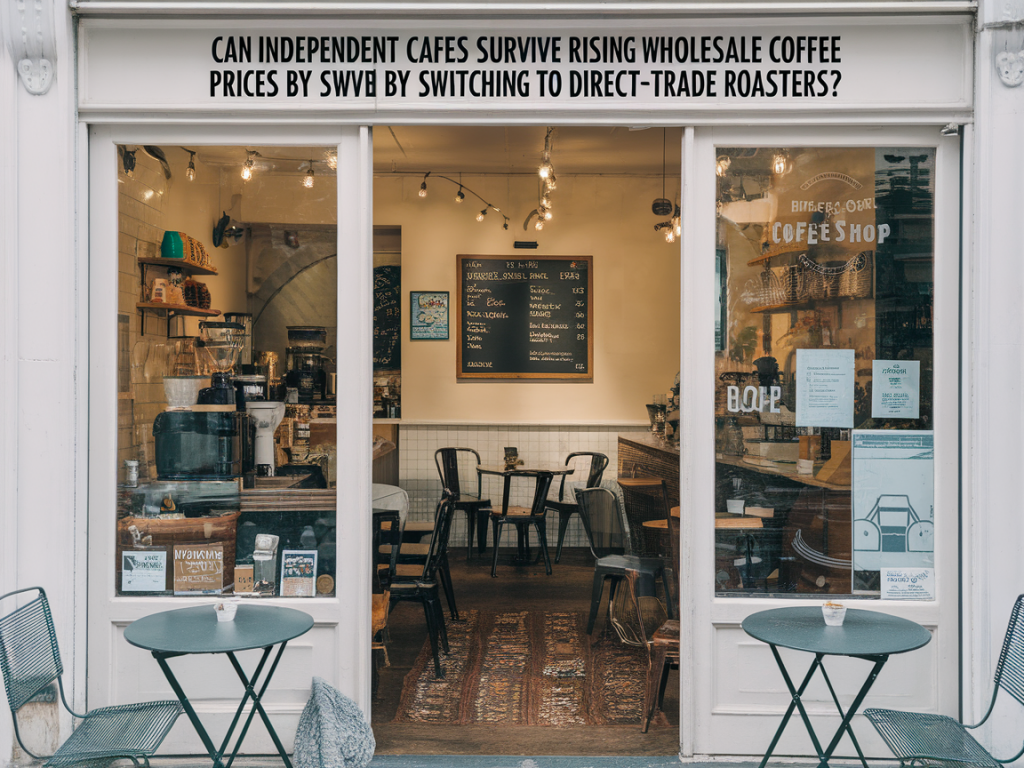
I watch the coffee industry closely—not just because I love a good flat white, but because independent cafés sit at an awkward intersection of passion and commerce. Lately I’ve been getting the same question from owners, baristas and readers: Can independent cafés survive rising wholesale coffee prices by switching to direct‑trade roasters? The short answer is: maybe—but it depends how you define “survive,” and on the choices a café makes during the switch. Here’s what I’ve learned reporting and talking to roasters, café owners and customers.
Why wholesale prices are rising (and what that means for cafés)
First, a bit of context. Global coffee prices are rising for several reasons: climate shocks in major producing countries, supply-chain disruptions, labour shortages, and speculative trading. For cafés that buy commodity-grade beans through brokers or large distributors, those increases hit margins fast. Many independents run on slim profitability—sometimes single-digit margins—so even modest increases can force menu price hikes or cost-cutting that damages service and quality.
Switching to a direct‑trade roaster is often presented as a way to stabilise quality and build supplier relationships. But it’s not a magic bullet against rising input costs. Direct trade changes who you buy from and how pricing is negotiated; it doesn’t remove the fact that green-bean costs can climb. What it can do is add value, storytelling and sometimes better price predictability—but only if you execute the transition thoughtfully.
What direct trade actually offers cafés
When cafés switch to direct‑trade roasters, they move from anonymous commodity chains to relationships—between roaster and farmer, and between roaster and café. The potential benefits include:
That said, direct trade comes with trade-offs: smaller batch sizes, less price arbitrage, and sometimes higher per-kilo costs. If a roaster pays farmers better premiums (as many direct‑trade models do), those costs are usually passed along to buyers like cafés.
Will customers accept higher prices?
One of the crucial questions cafés face is whether customers will accept paying more. From my interviews, customers often tolerate—and even welcome—higher prices when three things happen:
Put bluntly: you can raise prices if you continue to deliver and to communicate. Many independents I’ve spoken to have successfully implemented tiered offerings—a house espresso made from a stable, cost-effective blend, and a rotating single-origin pour-over that customers pay extra for. That allows them to capture margin without alienating price-sensitive regulars.
Operational considerations and pitfalls
Switching to direct trade isn’t only about cost. Operational changes matter:
I heard from a London café owner who switched to a direct‑trade roaster based in East London. The coffee tasted better, and the customers loved the provenance. But she underestimated the frequency of reorders: some lots sold out within ten days. She had to ration servings while waiting for the next shipment. That volatility hit both sales and customer satisfaction until she and the roaster established a more predictable shipping cadence.
Negotiating with roasters: what to ask for
Not all direct‑trade roasters operate the same way. When I asked experienced café owners what they look for, they highlighted several negotiation points:
Alternatives and complementary strategies
Switching to direct trade can be part of a resilience strategy, but it’s rarely the only lever cafés should pull. Consider these complementary moves:
Real-world signals: who’s succeeding?
I visited cafés that pulled this off. One small café in Bristol partnered with a Scandinavian-style direct‑trade roaster. They kept a pragmatic approach: a reliable house blend for everyday espresso and two rotating single-origin filter options sold at a premium. They trained staff to tell the origin stories on the till and through QR codes. The result: customers accepted a 10–15% price increase because the experience and transparency made it feel fair.
Conversely, I met an owner who simply swapped suppliers without changing anything else—no staff training, no menu adjustments, no communication. Their regulars noticed a difference in taste but not in value, and footfall dipped. Switching supply alone is rarely enough; it must be part of a broader customer- and operations-focused strategy.
Questions you should ask yourself before switching
Before you commit, I recommend asking:
Answering these honestly will help you decide whether direct trade is the right move for your café.
Switching to direct‑trade roasters can be a lifeline for independents facing rising wholesale prices—but it’s not automatic. It requires investing in relationships, training, inventory systems, and storytelling. Do it well, and you can convert higher bean costs into a stronger brand, more loyal customers and healthier margins. Do it without strategy, and you risk higher costs without the payoff.