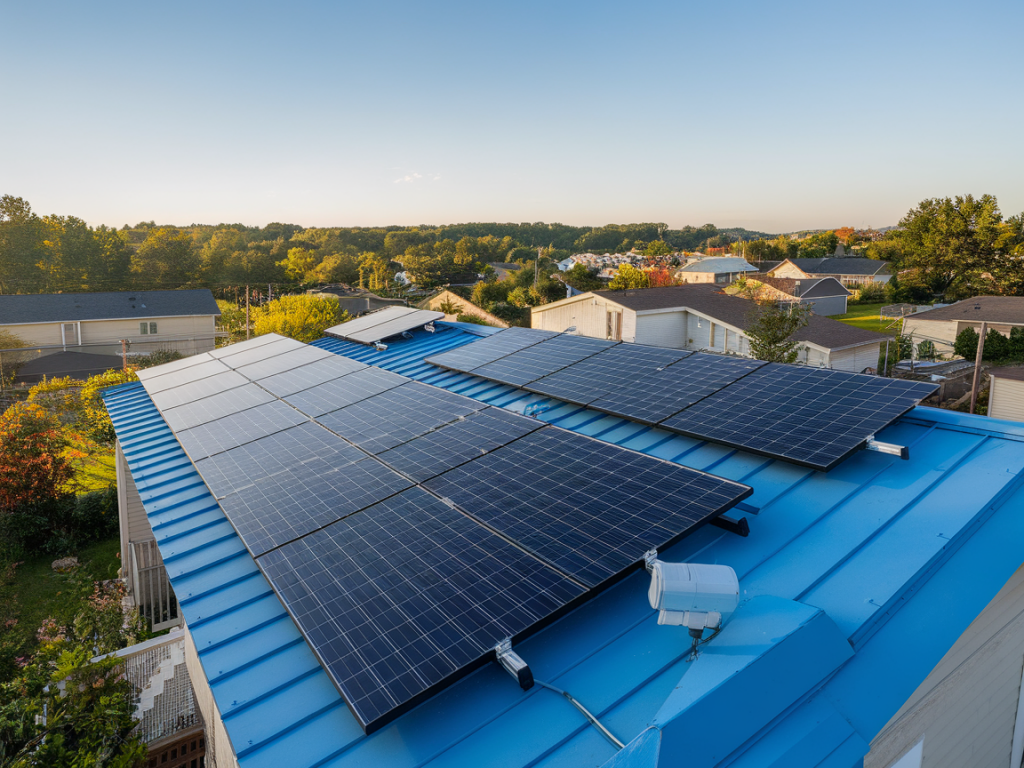
When my neighbour first mentioned the idea of pooling our rooftops to sell excess solar to each other and reduce our bills, I admit I was skeptical. The image I had was of complicated contracts, technical headaches, and months of council red tape. But as I dug into how community rooftop solar buybacks can actually work, I found a surprisingly practical, even empowering model that has real potential to lower household energy costs while strengthening local resilience.
What are community rooftop solar buybacks?
Put simply, a rooftop solar buyback is a system where households with solar panels sell excess generation to nearby neighbours at a mutually agreed price rather than exporting it to the grid at a lower wholesale or feed-in tariff. A community buyback extends this idea across several homes in a street or small neighbourhood: participants share generation, consumption, and sometimes storage to keep energy circulating locally.
Instead of relying on your energy supplier to credit you with a low export rate, you arrange direct purchases — often mediated by a digital platform, local co-operative, or even a private agreement — so that more of the value stays in the community.
Why could this reduce household bills?
There are several mechanisms through which community buybacks save money:
Higher value for exported energy: Grid export tariffs are typically low. Selling directly to neighbours can command a higher, negotiated price that still undercuts retail rates, creating a win-win: sellers earn more than the standard export tariff, and buyers pay less than their supplier's import price.Reduced grid losses and network charges: When energy is consumed close to where it's produced, less electricity is lost in transmission. Additionally, some utilities levy network charges on imported energy that can be avoided or reduced with local balancing.Peak shaving and time-of-use savings: Combined with smart controls and batteries, neighbourhood solar can reduce peak demand on the grid. If households face time-of-use tariffs, shifting consumption to local solar hours can lower bills substantially.Collective purchasing power: Communities can negotiate group rates for equipment, installation, maintenance, and even dynamic energy-management platforms, bringing down per-household costs.How does it work in practice?
There are several practical models. Which one suits you depends on local regulation, the technical setup, and how formal your group wants to be.
Peer-to-peer (P2P) trading platforms: Platforms like Piclo in the UK or Power Ledger in other markets enable P2P energy transactions, routing credits between prosumers and consumers while integrating with smart meters.Virtual net metering: Also called shared solar, this assigns solar production to participants’ accounts in proportion to an agreement. It typically requires coordination with a supplier or local distribution network operator.Local energy cooperatives: Neighbours form a legal entity to own panels and batteries installed across several roofs. The co-op manages billing and distribution internally and can set internal prices for buybacks.Informal private agreements: In smaller setups, households track generation and consumption with smart meters and settle differences monthly via simple accounting — low-tech but effective if trust is high.Key technical components
To make buybacks credible and efficient you’ll need:
Smart meters: They record half-hourly or hourly flows, which is essential for tracking who produced and who consumed.Monitoring and settlement platform: Either a commercial service (e.g., community energy platforms) or a simple spreadsheet for tiny groups. The platform should handle measurement, invoicing, and reporting.Installations and inverters: Ideally, inverters that support export limiting, remote control, and communications (e.g., SolarEdge, Enphase, SMA).Optional batteries: Community-owned or household batteries (Tesla Powerwall, LG Chem, or BYD) can store daytime surplus for evening use, increasing self-consumption and reducing reliance on imports.Regulatory and legal hurdles
This is where the project can get tricky, and why research is essential before you start. Rules vary by country and even by local network operator.
Licensing and supplier rules: Some jurisdictions require energy suppliers or licensed aggregators for P2P trading. Check whether your proposed buyback violates retail licensing laws.Metering standards: For settlements that affect billing, you usually need approved meters and data handling compliant with your national electricity regulator.Grid connection terms: Export limits, anti-islanding protection, and safety compliance are critical. Your distribution network operator may require notifications or specific equipment.Tax implications: Earnings from selling energy might be taxable or affect benefits. Likewise, VAT treatment for installation costs can differ for co-operatives vs individuals.How neighbours can start one — a practical roadmap
From conversations on my street, the best community buybacks begin small and pragmatic. Here’s a step-by-step approach that worked for a neighbourhood group I followed:
Start with a meeting: Gather interested households for an informal discussion. Share goals, concerns, and what each household can contribute (rooftop space, finances, technical skills).Map assets: Document who already has panels, inverter types, meter capabilities, and space for batteries. This helps identify potential sellers and buyers.Do a feasibility study: Estimate generation profiles, consumption patterns, and potential savings. Local universities, community energy groups, or commercial consultants can help affordably.Choose a model: Decide whether to use a P2P platform, a co-op, or a simple bilateral settlement. Consider scalability and regulatory constraints.Agree on pricing and governance: Set transparent rules for pricing (e.g., 60–80% of retail rate), dispute resolution, and membership terms. Putting these in a written agreement protects everyone.Arrange monitoring and billing: Implement a trusted system for measuring flows and settling accounts. For small groups, a monthly invoice with exported/imported kWh and agreed price works.Pilot and iterate: Run a pilot for 3–6 months, then review performance, user satisfaction, and technical issues before scaling up.Common pitfalls and how to avoid them
My most important piece of advice: anticipate the social as much as the technical challenges.
Overcomplicating governance: Try to avoid creating heavy bureaucracy for a small group. Start simple and professionalise only if you scale up.Underestimating metering needs: Without accurate data, settlements will be contentious. Ensure you have reliable, approved meters from day one.Ignoring grid rules: Speak early with your distribution network operator to avoid surprises like forced export limits.Poor communication: Transparent, regular communication maintains trust. Share reports and be clear about pricing and any changes.Real-world examples and tools
Several pilot projects worldwide show this model can work. In the UK, community energy groups and trials with platforms like Piclo Flex have explored local balancing and local flexibility markets. In Australia, Power Ledger has enabled blockchain-based P2P trading in pilot communities. Brands like Enphase with its Ensemble ecosystem or SolarEdge with StorEdge provide hardware that simplifies local control and storage integration.
| Tool/Platform | What it helps with | Use case |
| Piclo | Marketplace for flexibility and local energy | Settlement and matching prosumers with local demand |
| Power Ledger | P2P trading platform (blockchain-based) | Pilots for direct neighbour-to-neighbour sales |
| Enphase/ SolarEdge | Inverter + monitoring + battery integration | Technical backbone for local control and export limiting |
Who benefits most?
Community buybacks are especially attractive where export tariffs are low and retail prices are high — common in many countries today. They make particular sense in close-knit areas with high solar penetration, strong trust among neighbours, and supportive local policy. Renters and flats can also benefit if roof access is negotiated with landlords or through building-scale installations.
Starting a community rooftop solar buyback isn't a silver bullet — technical, regulatory, and social hurdles exist. But when neighbours come together with clear rules, good metering, and the right technology, the result can be lower bills, more resilient local supply, and a tangible sense of shared purpose. If you're thinking of trying this where you live, begin with a meeting, map what you already have, and reach out to local community energy groups for practical help.