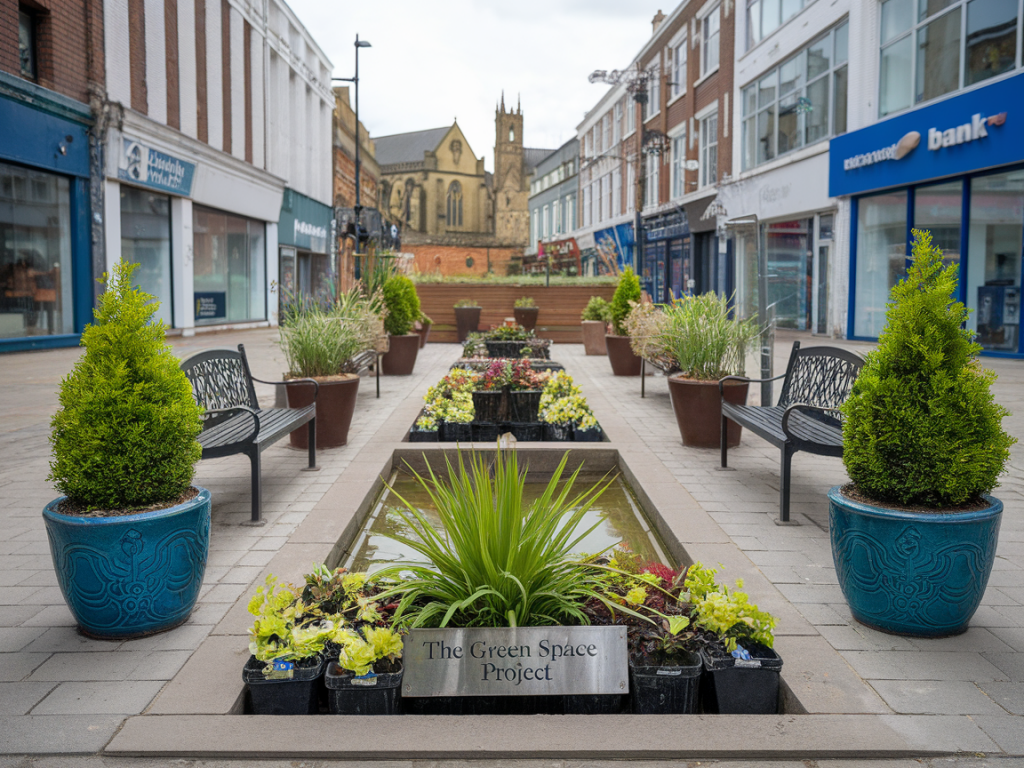
I’ve walked more than a few high streets that look like ghost towns: empty windows, faded signage, and a sense that these places have been forgotten by policy-makers and investors alike. Yet beneath that quiet there’s huge potential. Local councils can unlock it without blowing their budgets — if they think creatively, act fast, and partner with the community and the private sector. Below I set out practical, low-cost ways to repurpose unused commercial spaces so high streets become places people want to visit and spend time in again.
Why unused commercial space is a problem—and an opportunity
Empty shops depress footfall, reduce business rates income, and create a feedback loop that pushes customers and traders away. But those vacant units are also a resource: they’re already in the centre of town, connected to transport, and often cheaper than greenfield alternatives. I see them as short-term laboratories and long-term assets. Councils can employ a mix of temporary and permanent interventions to generate activity, test ideas, and attract investment — and many of those interventions need surprisingly little capital.
Low-cost, high-impact “meanwhile” uses
One of the best tools in the toolkit is the “meanwhile” model: short-term leases or licences that let organisations use empty premises for pop-ups, galleries, workshops, or community services. These are quick wins because they:
Councils can use simple licence templates (many councils already have model documents) and small fee waivers to encourage charities, social enterprises, and micro-retailers. Organisations like Meanwhile Space specialise in facilitating these arrangements and can be a cheap partner rather than reinventing the wheel.
Convert to mixed-use: affordable workspace, community hubs, and cultural space
Permanent change often involves changing the use of a building — but that doesn’t have to be expensive. Councils can:
A low-cost approach is to provide grants or business-rate relief for the first six to twelve months to ease start-up risk. Partnering with workspace providers (from local operators to national names like Outlandish or established coworking brands) can secure management expertise without the council having to run the space itself.
Use planning and tax levers smartly
Planning policy and financial nudges can channel reuse without large direct spending. Practical levers include:
Many councils shy away from altering planning rules because they fear loss of control. I’ve found that targeted, time-limited relaxations (e.g., a temporary permitted development right) can unlock activity while retaining safeguards for long-term planning goals.
Build partnerships, not projects
One truth I’ve learned is that council budgets are rarely the limiting factor — capacity, relationships, and trust are. Successful schemes depend on partnerships with:
Set up a simple, single point of contact within the council — a “meanwhile officer” or high-street champion — to shepherd enquiries, match tenants to spaces, and speed up approvals. That human touch reduces friction and is inexpensive compared with prolonged negotiations.
Examples of low-budget interventions that work
Here are things I’ve seen succeed with modest public investment:
How to finance interventions without big budgets
You don’t need a big capital pot if you deploy mixed finance creatively:
A simple table of typical low-cost interventions and ballpark one-off costs helps councillors prioritise quickly:
| Intervention | Typical one-off cost | Notes |
|---|---|---|
| Short-term pop-up licence and basic fit-out | £500–£5,000 | Depends on landlord contribution and volunteer fit-out |
| Artist residency / gallery setup | £1,000–£10,000 | Often offset by small grants and ticketed events |
| Co-working micro-fit-out (modular furniture) | £5,000–£25,000 | Can be scaled incrementally |
| Community hub conversion (longer term) | £10,000–£100,000+ | Higher if structural changes or new utilities required |
Measure impact and iterate
One of the reasons pilots work is that you can measure and adapt quickly. Focus on a few practical KPIs: footfall, new business starts, jobs created, event attendance, and social value measures like users of services. Collect qualitative feedback from traders and residents — their stories are often the best evidence when seeking further funding.
Regulatory and practical pitfalls to avoid
From experience, the common mistakes are underestimating lease complexity, failing to consult neighbours, and overcommitting council resources. Protect against these with clear, simple licensing documents, a visible calendar of activities, and sunset clauses so that temporary uses don’t become hard-to-manage forever. Finally, transparent communications about safety, opening hours, and waste management maintain good relations with neighbouring businesses.
Reactivating high streets doesn’t require heroic budgets — it requires practical levers, close partnerships, and a willingness to try small, fast experiments. When councils focus on enabling activity rather than owning every solution, unused commercial space becomes a canvas for community-led revival, new jobs, and a revitalised local economy.