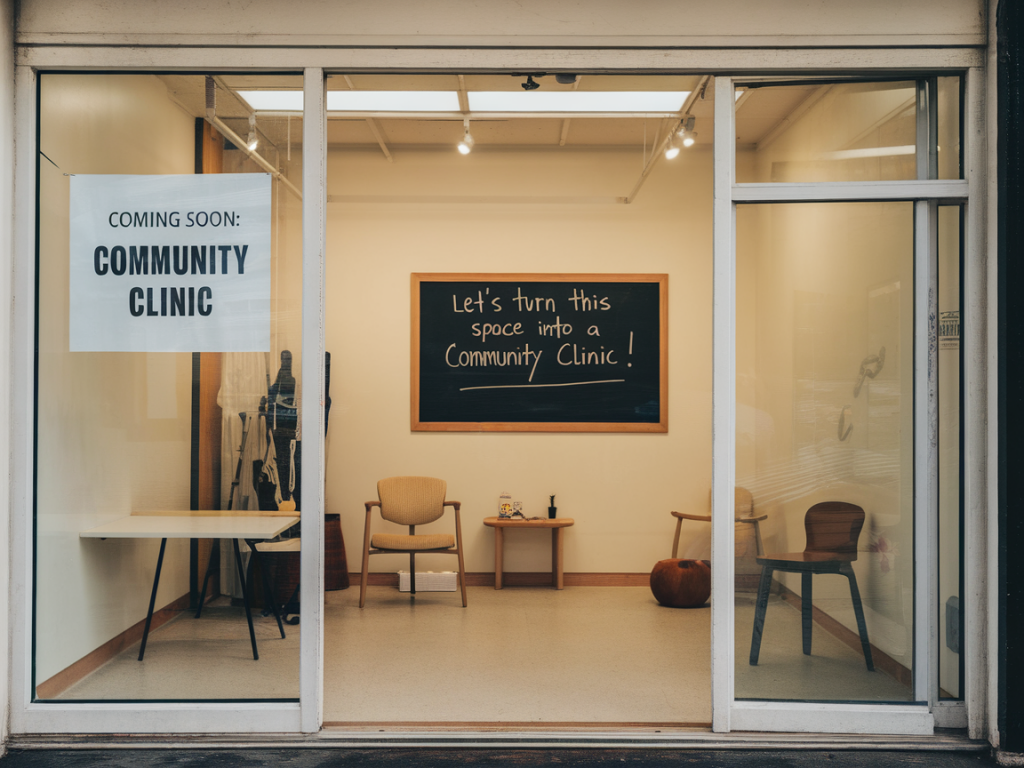
I’ve been watching town centres empty out for years: charity-run foodbanks tucked into former phone shops, boutique yoga studios in once-bustling department stores, and half the high street with “To Let” signs fluttering in the wind. What I keep coming back to is a simple question: what if councils could turn those vacant spaces into low-cost childcare or community clinics without waiting for fresh government money?
It isn’t a pipe dream. With imagination, existing assets and smarter use of policy tools, local authorities can repurpose empty retail units in ways that provide essential services and reinvigorate neighbourhoods. Here’s how I think it could be done in practice, what the hurdles would be, and which quick wins are ready to try now.
Why this matters now
Parents are struggling with childcare costs and availability. NHS waiting lists and health inequalities mean people need more local, accessible care. At the same time, high streets are dotted with units that sit empty for months or years, generating little economic or social value.
Converting retail spaces into childcare or clinics addresses multiple problems: it provides services close to where people live, reduces commute-related emissions, increases footfall for remaining shops, and uses existing infrastructure instead of building costly new facilities. The key is doing it without waiting for new pots of public money.
Use what councils already control
Many local authorities already own or manage property — from former libraries and council offices to long-term leases and assets recovered through compulsory purchase or surrender. I’d start by auditing all council-owned or controlled units within a town centre and mapping them to local needs.
Once you have that inventory, you can prioritise units where conversion is low-cost and high-impact: ground-floor, accessible spaces close to public transport and residential areas.
Use existing funding differently
Local authorities don’t need brand-new funding streams to act. They can reallocate or repurpose existing budgets and leverage non-cash mechanisms:
In many cases, the money already exists on paper — it’s a question of shifting priorities and showing the political will to invest in social infrastructure that has long-term returns.
Partnerships that make projects cash-neutral
I’ve seen the most durable projects come from multi-stakeholder partnerships that align incentives:
These partnerships can be structured so that operating costs are covered by mixed revenue streams: small parental fees (means-tested), NHS contracts for clinics, social finance for upfront fit-outs, and council-backed lease subsidies for the first 12–24 months while services stabilise.
Design for low-cost, fast fit-outs
Full commercial conversions are expensive. Instead, focus on modular, reversible interventions that comply with regulations but avoid major capital expense.
For childcare, items like secure outdoor play areas can be achieved through temporary enclosures and nearby parks rather than expensive private gardens. For clinics, telehealth booths and shared diagnostic kits can reduce the need for full clinical labs on site.
Regulatory and legal levers
Some barriers are regulatory, but even here councils have options without extra central funding.
These approaches reduce friction and create a testing ground where successful pilots can scale.
Community involvement and workforce
I believe projects work best when residents are part of the design and delivery. Invite parents, local clinicians and community groups into planning tables. Offer training programs — perhaps run with local colleges or Jobcentre Plus — to create a pipeline of early-years workers and community health assistants who can staff new services.
Measuring impact and scaling what works
Start small, measure rigorously, and scale. Councils should track:
| Metric | Target | Data source |
|---|---|---|
| Childcare occupancy | 75% within 6 months | Provider bookings |
| Clinic drop-in visits | 100/week | NHS/clinic records |
| High-street vacancy rate | Reduce by 10% in 12 months | Council asset register |
These figures allow councillors and officers to show quick wins and make the case for longer-term investment where it makes sense.
I’m not suggesting this is a silver bullet. Some units will be unsuitable; some pilots will fail. But by using existing property, retooling budgets, forging partnerships and lowering regulatory barriers, councils can create low-cost, high-impact local services that both meet urgent needs and give life back to high streets. And the beauty of this approach is that it doesn’t wait for a new funding round — it builds on what’s already there.