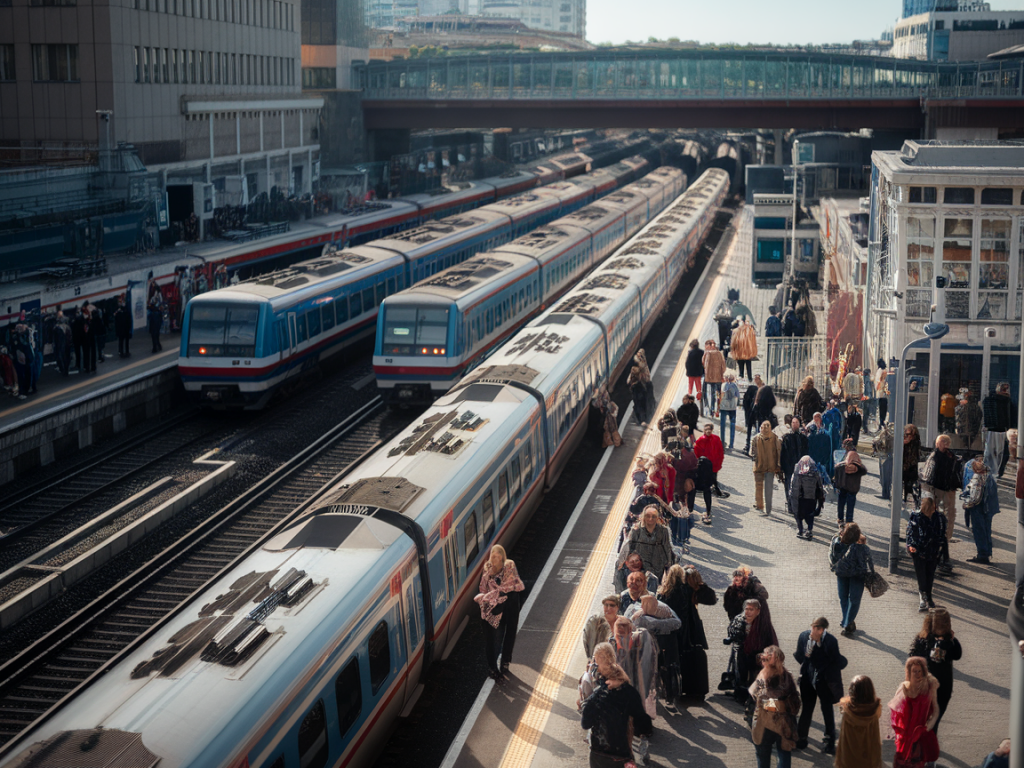
I’ve been watching the recent uptick in rail interest with more than a passing curiosity. Conversations with commuters, planners, and friends who’ve swapped flights for trains suggest this isn’t just a fad — it’s a signal that citizens are recalibrating what they want from national transportation. As someone who covers policy and technology, I think this surge could reshape priorities in ways both obvious and subtle. Below I unpack why rail is back in the conversation, what it could mean for policy decisions, and the realistic trade-offs that lie ahead.
Why rail is suddenly back on people’s minds
There are several converging reasons for the renewed enthusiasm. First, the pandemic rewired habits: remote and hybrid work reduced daily commuting but increased demand for reliable, comfortable long-distance travel at irregular times. People who used to fly domestically have discovered the convenience of city-center to city-center rail travel.
Second, climate concerns are rapidly moving from fringe activism to mainstream voter expectations. Trains have a strong environmental narrative: per passenger-kilometre emissions for electric rail are far lower than those for private cars and short-haul flights. Third, the rising cost of air travel and the unpredictable hassles of airports — security queues, delays, baggage issues — have nudged travelers toward alternatives that feel more predictable.
Finally, there’s a cultural element. Films, social media, and lifestyle coverage cast rail travel as both romantic and practical. Companies like Eurostar and new services from the likes of Renfe and Deutsche Bahn are marketing rail as a premium yet sensible option for business and leisure alike.
What this interest means for national transport priorities
When voters pivot, politicians and planners take note — or at least they should. Here’s how a lasting modal shift toward rail could change strategic priorities:
Real constraints and trade-offs
None of this happens without difficult choices. Rail projects are capital intensive, often politically sensitive, and slow to deliver. Even electrifying a single line can take years of planning, procurement, and coordination.
Capacity remains a core issue. Popular intercity routes already run close to full. If many more travellers choose trains, we’ll need more trains, longer platforms, and upgraded signalling (think European Rail Traffic Management System — ERTMS). That requires cash and a skilled workforce.
There’s also a governance problem: transport responsibilities are often split across local, regional, and national bodies. Aligning incentives to prioritise rail over roads or aviation takes political will and cross-jurisdictional coordination that many countries lack.
Policy levers that could accelerate the shift
Policymakers have several tools to nudge travel patterns and accelerate safer, greener, more reliable rail networks. From my reporting, the most effective blend combines investment, pricing, and regulation:
Practical examples and what to watch for
Look at the recent growth of services such as the London–Paris Eurostar relaunches and the expansion of night trains between European capitals. Those moves are instructive: they show demand exists when service is reliable, affordable, and well marketed. In the UK, proposals to reopen lines or improve TransPennine and regional services are exactly the sorts of projects that could attract both public affection and political attention.
Another model is the German approach, which combines strong regional planning, integrated ticketing with local transit, and substantial subsidies for regional rail. It’s not perfect, but it has kept rail use resilient and flexible enough to serve both daily commuters and long-distance travellers.
| Mode | Approx. CO2 per passenger-km |
|---|---|
| Electric rail (average) | ~20-30 gCO2 |
| Car (single occupant) | ~150-200 gCO2 |
| Short-haul flight | ~200-400 gCO2 |
These figures vary by country grid intensity and load factors, but they highlight why sustainability-minded travellers are switching to trains when they can.
What citizens should expect in the near term
In the short term, expect patchy improvements rather than wholesale transformation. We’ll see targeted investments on high-profile routes, pilot projects for night and sleeper services, and perhaps new funding streams. Expect debates about who pays: taxpayers, farepayers, or private investors.
If demand keeps growing, look for more political appetite to tackle thorny issues like road pricing and airport capacity. That’s where the real change may come: policy choices that shift the economics of travel, not just the availability of trains.
I’m watching how governments respond — whether they treat rail enthusiasm as a fleeting trend or as a catalyst to rewrite transport priorities for the 21st century. For readers, the key question is simple: will your local and national leaders turn this moment into a durable commitment to cleaner, more equitable mobility — or will short-term politics drown out the momentum?