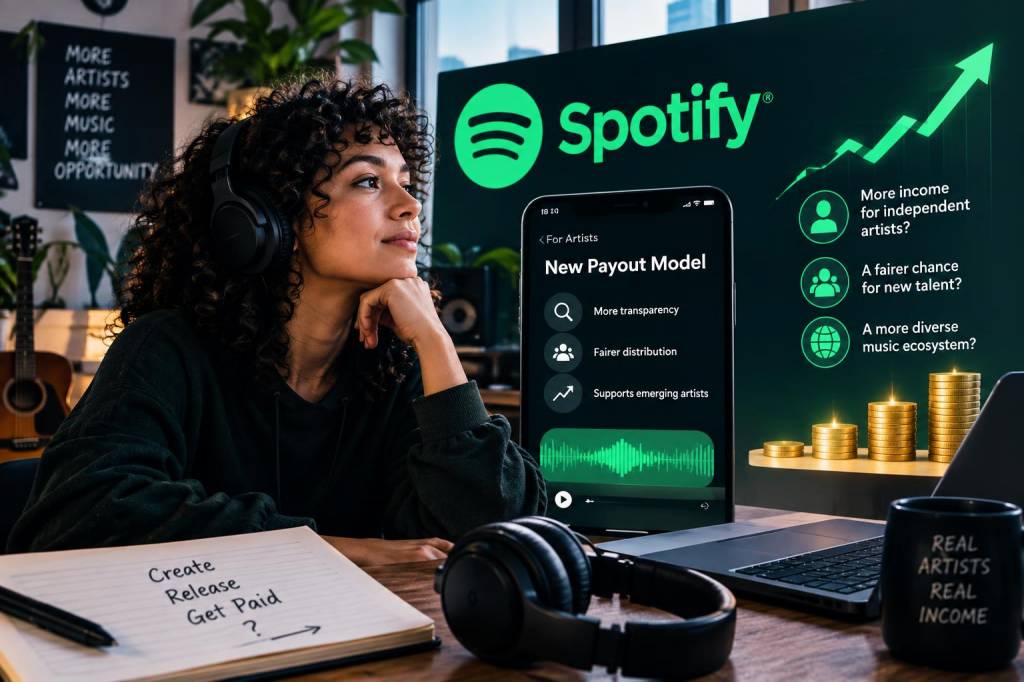
When Spotify started testing alternative payout systems — moving away from the long-dominant pro-rata model toward versions of a user-centric or “fan-powered” approach — I felt a mix of curiosity and cautious optimism. For years, the math behind streaming revenue has been the invisible gatekeeper deciding which artists can make a living. If those calculations shift, even slightly, the landscape of who thrives on streaming might finally change in meaningful ways.
Why the payout model matters
Most people who listen to music don’t think about royalties. They tap a playlist or follow an algorithm and expect the service to deliver. But underneath that ease is a distribution system that allocates tens of billions of dollars every year. The current mainstream method — the pro-rata model — pools all subscription (and ad) revenue, ranks tracks by total plays across the entire platform, and divides the money according to each track’s market share.
That favors blockbusters. A global hit can soak up a huge slice of the revenue pie, while niche artists with dedicated but smaller audiences can see their per-stream payout diluted. In practice, two artists with the same number of streams can be paid differently depending on who else listeners are streaming on the platform that month.
What Spotify’s new model (or tests) actually propose
Spotify’s experiments — described publicly as “fan‑powered” or user-centric trials by some — aim to connect a user’s subscription fee more directly to the artists they personally listen to, rather than to the global top-streamed list. In a user-centric model, if you spend 30% of your listening time on an indie jazz trio, 30% of your subscription’s artist allocation goes to them, not to the platform-wide chart leaders. The result should, in theory, reward artists who have smaller but engaged fan bases.
Spotify has framed these tests as ways to explore fairness and to help artists better monetize loyal fans. But the devil is in the details: how they define allocation windows, deal with free-tier listeners, handle family plans, and integrate with licensing agreements with labels will determine real-world impact.
Who stands to gain — and who might lose
From where I sit, the most obvious beneficiaries are independent artists and niche creators who already have concentrated, loyal followings. Think of a DIY songwriter whose fans listen to full albums repeatedly, or a regional rap collective with a passionate local base. Under a user-centric approach, those repeated listens translate more directly into revenue.
- Independent artists: More predictable per‑fan earnings and better monetization of local or niche popularity.
- Genres with dedicated audiences: Jazz, classical, local-language music and certain subcultures could see improved returns.
- Smaller labels: A fairer distribution could help indie labels reinvest in talent development rather than chasing playlist algorithm placings.
But it’s not a simple win for everyone. Major labels and superstar acts benefit from scale and playlist dominance. They could see a relative dip in streaming income if mega-hit streams don’t capture as large a slice of every user’s subscription fee. That raises potential friction: label contracts, marketing spend, and global promotional strategies are all built around current economics. Any shift could prompt renegotiations or strategic platform pressure.
Limitations and unintended consequences
I’m wary of framing the payout change as a silver bullet. Here are some issues I keep coming back to when talking with artists and industry insiders:
- Scale of change: If only one platform adopts user-centric payouts, artists may see marginal differences because listeners use multiple services (Spotify, Apple Music, YouTube Music). The aggregate effect depends on industry-wide adoption.
- Family and shared accounts: How a single account with multiple listeners is treated could skew allocations. A house with fans of different genres might dilute earnings comparably to pro-rata.
- Free-tier and advertising: If ad-supported listeners are weighted differently, artists reliant on casual listeners could be disadvantaged.
- Data transparency: Artists need clear reporting to understand how changes affect them. Without that, claims of fairness ring hollow.
- Gaming the system: Any new model invites manipulation. Bots, fake plays, or coordinated streaming campaigns could emerge as bad actors chase newfound incentives.
What it would take to actually reshape livelihoods
From my reporting and conversations, three conditions are essential if streaming payouts are to meaningfully change who can make a living:
- Broad industry buy‑in: One platform experimenting is interesting; a systemic change requires adoption across major streaming services or at least alignment among labels, publishers, and digital distributors.
- Transparent accounting: Detailed, timely reporting that breaks down per-user allocation, family plan impacts, and ad revenue shares will let artists plan and adapt.
- Complementary revenue streams: Streaming alone rarely sustains careers. Ticketing, merchandising (Bandcamp, Shopify), sync licensing, Patreon or Ko-fi memberships, and direct-to-fan distribution via DistroKid or CD Baby still matter.
Practical steps for artists and managers
If you’re an artist—or advise artists—there are immediate actions that make sense regardless of how payouts evolve:
- Encourage true fan engagement: Convert casual listeners into subscribers and followers via meaningful calls to action, mailing lists, and exclusive content.
- Diversify distribution: Use Bandcamp or direct sales for higher-margin revenue; consider Patreon or subscription models for superfans.
- Focus on retention: Repeat listens from loyal fans matter more in user-centric systems, so album sequencing, storytelling, and curated experiences can boost per-fan value.
- Monitor data closely: Whether Spotify changes payouts or not, deeper analytics (from Spotify for Artists, Chartmetric, etc.) are how you spot actionable trends.
How listeners can influence outcomes
One often-overlooked reality is that listening behavior is the lever fans have. If you're a fan who wants to support an artist, here’s what makes a difference:
- Stream consistently rather than in one binge session.
- Follow artists and save songs to playlists or libraries.
- Share music with friends and attend shows — streaming income is only part of the ecosystem.
Comparing models at a glance
| Model | How it allocates revenue | Likely winners |
|---|---|---|
| Pro‑rata | Pools all revenue, pays by global market share of streams | Top-charting superstars and viral hits |
| User‑centric / Fan‑powered | Allocates a user’s fee to artists they personally listened to | Independent artists with concentrated fanbases; niche genres |
| Hybrid / Other | Mixes elements to balance scale and fairness | Depends on implementation; aims to spread benefits |
I’m skeptical of simple narratives that say “this will save independent music” or “this will destroy labels.” Change in how streaming pays artists is meaningful, but it’s one thread in a larger fabric. For many creators, the most practical approach remains a hybrid: leverage streaming for discovery, build direct relationships for revenue, and treat any platform reforms as an opportunity — not a panacea.