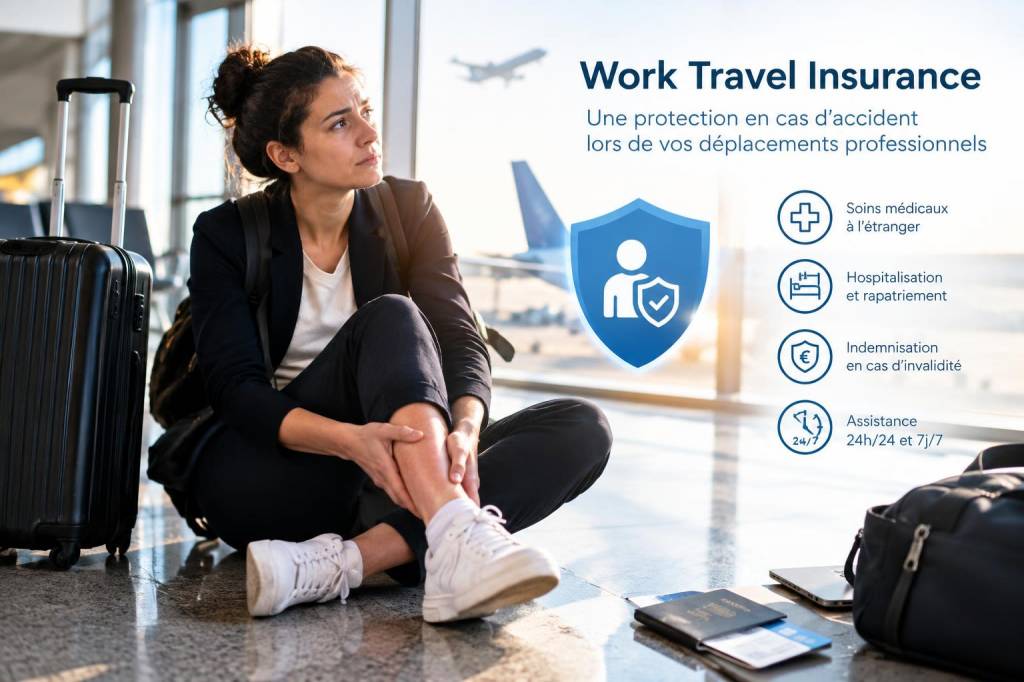
I travel frequently for work, and over the years I’ve learned that the difference between a trip that’s stressful and one that’s manageable often comes down to one thing: protection en cas daccident lors dun déplacement. Whether I’m boarding a short domestic flight or taking an international assignment, knowing the precise scope of my cover, how to act if something happens, and which policies complement each other, makes me calmer and more effective on the road.
Why "protection en cas daccident lors d'un déplacement" matters for business travelers
Accidents don’t wait for convenient times. According to the International Labour Organization, millions of non-fatal work-related injuries occur annually worldwide, and many happen during commuting and business travel (source: ILO). For anyone responsible for people on the move—employees, freelancers, consultants—the stakes are both humanitarian and financial: quick access to care, medical evacuation if needed, coverage of lost income, and clear liability rules.
From practical experience, I can say that having the right protection in place reduces downtime, speeds up recovery, and avoids complex cross-border reimbursement disputes. It also protects employers from reputational and legal exposure when their staff are hurt abroad.
Core types of coverage to consider
- Accident insurance: Pays lump sums or medical costs after accidental injury. Often includes death and permanent disability benefits.
- Business travel insurance: Broad product that usually combines medical expenses, emergency evacuation, trip interruption, and sometimes liability.
- Occupational accident insurance: Specific to work-related incidents, covering employees during tasks, often distinct from general travel policies.
- Health insurance portability: Ensures continuity of health coverage when traveling across borders or when on temporary foreign assignment.
- Personal accident top-ups: Additional layers that cover gaps (e.g., air ambulance, repatriation, or higher disability payouts).
How these policies interact (and where gaps often appear)
One of the most confusing things I’ve encountered is how multiple policies overlap—or fail to. For example:
- Employer-provided occupational accident cover may pay for work-related injuries but exclude commuting or personal activities on a trip.
- Standard health insurance may not cover evacuation or care in a foreign private hospital.
- Travel insurance often excludes incidents considered occupational (e.g., injuries while performing a job-specific task like rigging equipment), unless you buy a business travel add-on.
That’s why I always read the exclusions and ask three key questions: "Is travel for work explicitly covered?", "What is the definition of a work-related accident?", and "Does it include medical evacuation and repatriation?"
Practical checklist before any business trip
- Know the exact wording in your employer’s policy (carry a summary of benefits).
- Buy a dedicated business travel policy when employer cover is limited.
- Confirm emergency assistance contact details and store them offline.
- Carry proof of vaccination, critical medical info, and a copy of prescriptions.
- Register with your embassy for longer international assignments.
Comparative table: common policy features and typical limits
| Feature | Employer occupational cover | Business travel insurance | Personal accident policy |
|---|---|---|---|
| Medical expenses abroad | Often limited / networked hospitals | Usually covered (limits vary) | Sometimes covered (depends on policy) |
| Emergency evacuation | Sometimes included | Usually included | Rarely included unless specified |
| Permanent disability payout | Typically covered | May be included | Core benefit |
| Trip interruption / delay | Unlikely | Yes | Unlikely |
| Legal liability | Limited | Optional add-on | No |
Numbers and trends to keep in mind
Some figures underline why this topic grows more important every year:
- Business travel volumes rebounded strongly after the pandemic; IATA reported business travel recovery trends in 2023 and 2024, which raises exposure to travel-related incidents (IATA).
- The World Health Organization highlights that delays in emergency care increase mortality and long-term disability—timely evacuation and treatment can be life-saving (WHO).
- According to OECD and national labor statistics, non-fatal work injuries remain common, and cross-border complications can multiply administrative costs for employers (source: OECD).
Real-life scenarios and what I recommend
I’ll describe three common situations I’ve helped colleagues handle, with practical steps you can adopt.
- Minor accident overseas (sprain, outpatient treatment): Contact assistance provider, get an itemised invoice, submit claim with employer HR and travel insurer. Keep local receipts. If the insurer pre-approves treatment, follow their hospital list to reduce out-of-pocket costs.
- Serious injury requiring evacuation: Notify emergency assistance immediately. If you’re unconscious, an employer or travel companion should use the emergency contact. Evacuation can cost tens of thousands of dollars—verify that the policy authorizes air ambulance and repatriation.
- Workplace liability dispute after an accident: Document everything: photos, witness names, and formal incident reports. If legal aid is needed, check whether your business travel policy has a legal assistance add-on.
How to choose a policy—questions I always ask insurers
- Does the policy explicitly cover work-related activities and business equipment?
- Are high-risk activities (e.g., industrial site visits, offshore work) excluded?
- What are the limits for medical evacuation, and is repatriation included?
- How does the claims process work across borders, and is there multilingual assistance?
- Are there per-claim or aggregate annual limits that could exhaust coverage during prolonged assignments?
Tips for employers managing staff travel risks
- Maintain a clear travel policy that outlines insurance responsibilities and emergency procedures.
- Run pre-travel briefings that include local healthcare quality, transport risks, and emergency contacts.
- Consider group business travel or global medical insurance for staff on frequent long-haul assignments.
- Audit the vendor network—ensure partner hospitals and assistance centres are reputable.
Cost considerations and budget-friendly approaches
Costs vary widely by destination, traveler age, and risk profile. A few approaches I use to keep budgets realistic without skimping on safety:
- Buy multi-trip annual business travel policies for frequent travelers—per-trip cost goes down and administration simplifies.
- Negotiate group rates if you’re an employer—insurers often give better pricing for larger employee pools.
- Use policy layering: a primary employer plan plus a personal top-up for evacuation or higher disability limits.
Sources and further reading
- International Labour Organization (ILO) — workplace injuries and statistics.
- World Health Organization (WHO) — emergency care and global health guidance.
- International Air Transport Association (IATA) — business travel trends and safety guidance.
- For France-specific guidance on occupational risks: INRS (Institut National de Recherche et de Sécurité).
Common pitfalls I see—and how to avoid them
- Assuming coverage: Never assume an employer plan covers everything on a business trip. Always verify in writing.
- Skipping emergency registration: Not registering long-term travel with consular services can delay help.
- Poor documentation: Failing to collect invoices, medical reports, and incident statements makes claims slow and uncertain.
Quick reference: emergency steps if an accident happens during a trip
- Ensure immediate safety and get local medical help.
- Call the insurer’s emergency assistance number—do this before agreeing to costly transfers if possible.
- Inform your employer or emergency contact.
- Document the incident with photos, witnesses, and medical records.
- Keep receipts and request itemised invoices for all care rendered.